


What Is Cupping Therapy? Benefits, Process and Possible Side Effects
Unsere Inhalte werden sorgfältig recherchiert und anhand verlässlicher Quellen erstellt.
At Schloss Warnsdorf, we often meet guests who arrive physically exhausted, mentally overstimulated, or simply disconnected from their own sense of balance. Many are looking not only for rest, but for therapies that feel natural, structured, and genuinely supportive.
One treatment that regularly sparks curiosity is cupping Therapy – a traditional therapy that has been used for generations to stimulate circulation, ease muscular tension, and support regeneration.
Especially during therapeutic fasting or wellness stays, many guests appreciate how grounding and revitalizing this treatment can feel.
What Is Cupping Therapy?
Cupping is a traditional therapy in which specific areas of the body are treated using controlled negative pressure. Today, a distinction is usually made between dry cupping, wet cupping, and cupping Therapy.
At Schloss Warnsdorf, we offer dry cupping and cupping Therapy as part of our holistic therapeutic approach. If desired, we can also guide guests in gentle self-application techniques for continued support at home.
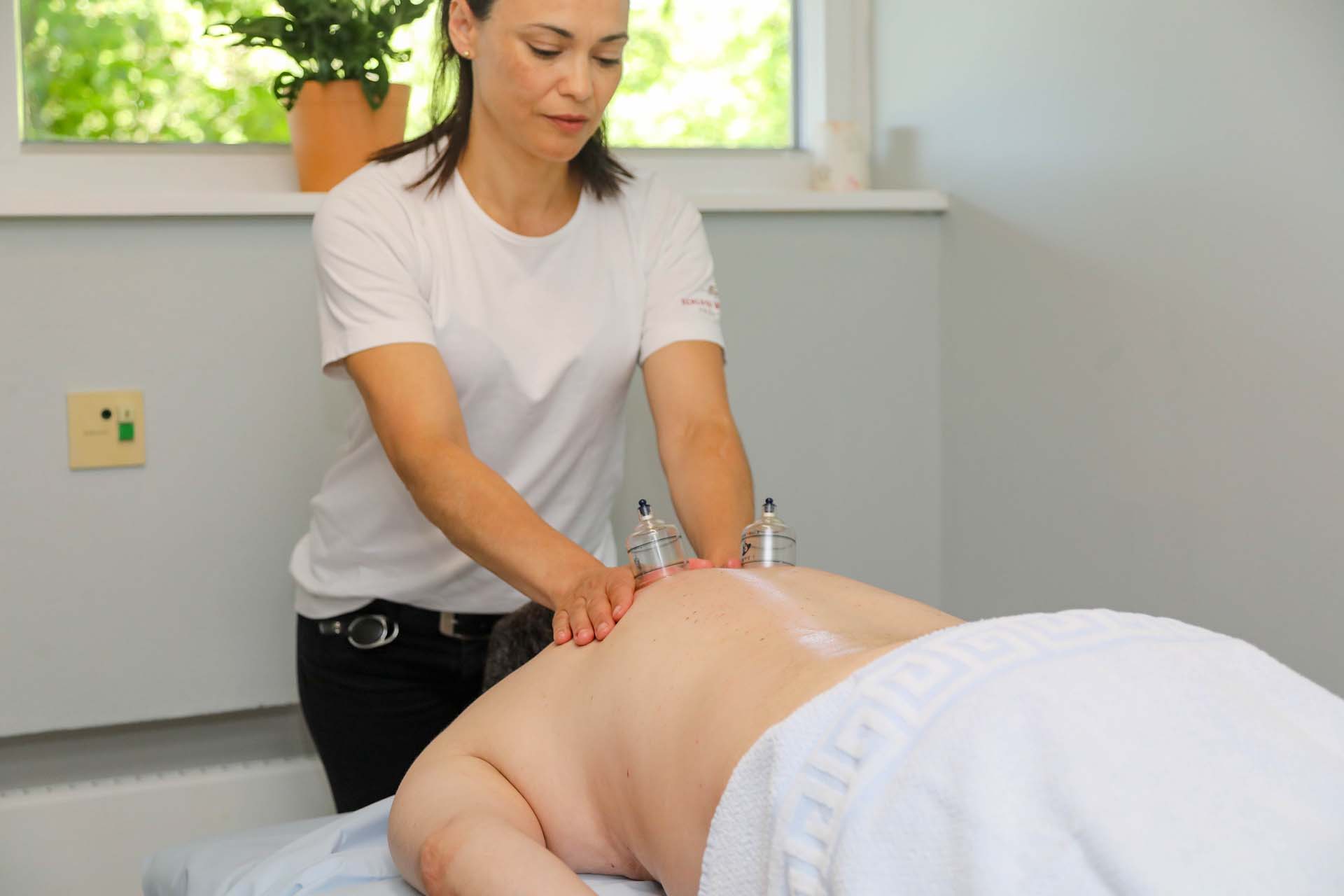
During a cupping Therapy, special cups are moved slowly across the skin after applying oil to the treatment area. The resulting cupping effect gently lifts the tissue beneath the skin and stimulates circulation.
Many people describe the sensation as unusual at first, yet deeply relieving after only a few minutes.
What Does Cupping Therapy Do?
A common question we hear is: “What does cupping therapy do?”
In simple terms, the therapy stimulates blood circulation, stretches fascia tissue, and helps release areas of tension. The treatment is often described as activating and invigorating while still creating a deep sense of calm afterwards.
The cupping Therapy effect can feel especially beneficial for people carrying stress in the shoulders, upper back, or neck – something we observe frequently among professionals balancing demanding schedules and constant mental strain.
Some guests notice they breathe more freely after treatment. Others describe a feeling of warmth and lightness in areas that had previously felt tight or heavy.
While cupping is not a replacement for medical care, it can be a supportive complementary therapy within a medically supervised wellness program.
What Are the Benefits of Cupping?
People naturally want to understand: “What are the benefits of cupping?” Although experiences differ from person to person, cupping Therapy may help support:
- Improved local circulation
- Relaxation of tense muscles
- Temporary reduction in pain and stiffness
- Fascia release and mobility
- Recovery after physical or emotional stress
- General relaxation and wellbeing
At our clinic, therapies are always integrated thoughtfully and individually. We believe wellness treatments should never feel rushed or impersonal. Especially during fasting programs, guests often benefit from treatments that support both physical relaxation and emotional decompression.
The visible marks associated with the cupping effect can vary depending on skin sensitivity and circulation. These are usually temporary and fade naturally over time.
What Are the Benefits of Cupping on the Back?
One of the most searched questions is: “What are the benefits of cupping on the back?”
The back tends to carry accumulated tension from long working hours, emotional stress, insufficient movement, or poor posture. Cupping Therapy may help loosen these areas while stimulating circulation in overworked muscles and connective tissue.
At Schloss Warnsdorf, many guests choose cupping Therapy as part of a broader regeneration experience. During a 10–14 day fasting or wellness stay, people often become more aware of how deeply stress has settled into the body.
It is not uncommon for someone to arrive with persistent shoulder tightness and only realize the extent of their tension once their body finally begins to relax.
This is where therapies like cupping Therapy can feel supportive- not dramatic or extreme, but gently restorative.
Fasting Plan & Programme
Fasting programmes, wellness activities and daily schedules.
Download PDF ↓What Is Cupping Good For?
Another frequent question is: “What is cupping good for?” Cupping Therapy is often chosen by people seeking natural support for:
- Stress-related muscular tension
- Burnout recovery and fatigue
- Wellness and detox programs
- Relaxation during therapeutic fasting
- Physical recovery after exercise or prolonged inactivity
The cupping Therapy effect is often most noticeable when treatments are combined with rest, mindful nutrition, movement, and professional medical guidance.
At Schloss Warnsdorf, guests are cared for within a small-group environment that allows for personal attention and individualized support. Our all-inclusive concept also means there are no hidden costs, allowing guests to focus fully on recovery and wellbeing.
What to Expect During a Session
Every session begins calmly and without pressure. Before treatment, we discuss individual sensitivities, areas of tension, and any relevant health considerations.
Oil is applied to the skin, and the cups are moved carefully across targeted areas of the body. The intensity can be adapted depending on comfort level and treatment goals.
Many guests are initially concerned that cupping may feel painful. In reality, most describe it as a strong but pleasant pulling sensation that becomes increasingly relaxing throughout the session.
At Schloss Warnsdorf, cupping Therapy treatments are available in two formats:
- 25 minutes — 48 euros
- 55 minutes — 90 euros
Possible Side Effects and Considerations
As with any therapeutic method, cupping Therapy may not be suitable for everyone.
Temporary side effects can include:
- Mild skin discoloration or circular marks
- Temporary soreness
- Sensitivity in treated areas
- Short-term fatigue after treatment
These reactions are generally temporary and part of the body’s response to increased circulation and tissue stimulation.
Because our therapies are integrated into a medically supervised environment, guests receive professional guidance tailored to their individual needs and health status.
A Thoughtful Approach to Regeneration
For many people today, health is no longer simply about treating symptoms. It is about creating sustainable recovery – physically, mentally, and emotionally.
At Schloss Warnsdorf, we believe therapies such as cupping Therapy work best when they are part of a calm, structured, and personalized approach to wellbeing.
Sometimes the most meaningful changes begin quietly: better sleep, deeper breathing, less tension, and the feeling that the body is finally being given the attention it has been asking for.
Häufige Fragen zur Schröpfmassage
Warum sollte man nach dem Schröpfen nicht duschen?
Nach dem Schröpfen kann die Haut durch den Unterdruck empfindlich sein. Eine schonende Nachpflege hilft, Hautreizungen zu vermeiden. Manche Therapeuten empfehlen, einige Stunden mit dem Duschen zu warten und zunächst auf heißes Wasser zu verzichten. Beachten Sie die individuellen Empfehlungen Ihres Therapeuten.
Was bedeuten violette Flecken nach dem Schröpfen?
Violette oder dunkle Verfärbungen nach dem Schröpfen sind meist vorübergehende Blutergüsse, die durch den Unterdruck entstehen können. Dabei können kleine Blutgefäße unter der Haut verletzt werden. Die Verfärbungen klingen normalerweise innerhalb von ein bis zwei Wochen ab.
Wirkt Schröpfen tatsächlich?
Schröpfen kann kurzfristig dazu beitragen, Muskelverspannungen und Schmerzen zu lindern. Die wissenschaftliche Evidenz für die Wirksamkeit ist jedoch begrenzt. Schröpfen sollte daher nur als ergänzende Behandlung und nicht als Ersatz für eine medizinisch notwendige Therapie betrachtet werden.
Hilft Schröpfen beim Abnehmen?
Es gibt keine ausreichenden wissenschaftlichen Belege dafür, dass Schröpfen zu einem signifikanten Gewichtsverlust führt oder Fett verbrennt. Es kann möglicherweise vorübergehend die lokale Durchblutung beeinflussen, ersetzt jedoch keine ausgewogene Ernährung und regelmäßige körperliche Aktivität.
Wie oft sollte man Schröpfen lassen?
Wie häufig eine Schröpfbehandlung sinnvoll ist, hängt von den individuellen Bedürfnissen, der Hautreaktion und der Erholungszeit ab. Manche Therapeuten empfehlen einen Abstand von ein bis zwei Wochen zwischen den Sitzungen. Lassen Sie sich von einer qualifizierten Fachkraft beraten, um den passenden Behandlungsrhythmus zu finden.